
Summary
This study provides an estimate of the total cost of five direct and five indirect subsidies to the renewable electricity sector in the United Kingdom since 2002. We find that:
- In the period 2002 to the present, the total cost to the electricity consumer of those renewable electricity subsidy schemes that we can quantify has amounted to approximately £220 billion (in 2024 prices), equivalent to nearly £8,000 per household.
- The annual subsidy cost is currently £25.8 billion a year, a sum equivalent to nearly fifty per cent of UK annual spending on defence.
- Subsidy to renewable electricity generators now comprises about 40% of the total cost of electricity supply in the United Kingdom (Figure 1 below).
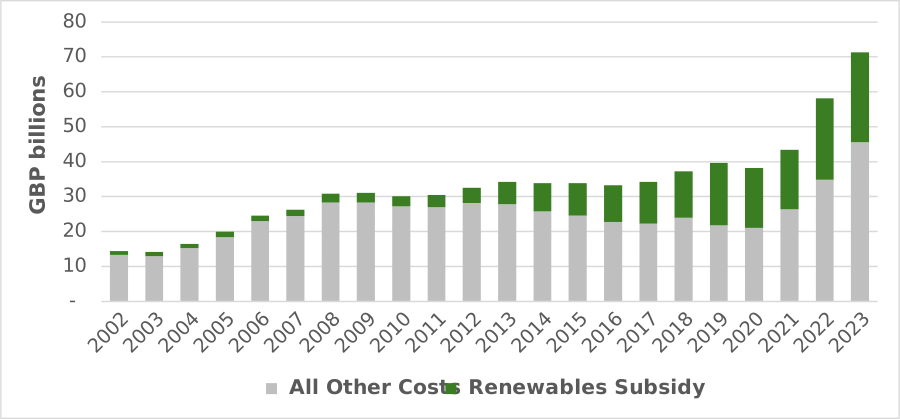
Figure 1. Renewable electricity subsidy as a share of the total cost of electricity to consumers, 2002-2023. Source: Renewables subsidy from Tables 1 and 2 below; All Other Costs from total of electricity to all consumers from Digest of UK Energy Statistics (DUKES) 1.3 Sales of electricity and gas by sector
- The total subsidy cost per unit of renewable electricity generated has risen by nearly 50% in real terms since 2005 and now stands at approximately £200/MWh. This contradicts government and industry claims that renewables are becoming cheaper but is consistent with expectations from the physics of energy flows, the empirical study of the capital and operating costs of both wind and solar, and the grid expansion and reinforcement and system management costs known to be imposed by renewables.
We conclude that these costs in large part explain falling electricity consumption in the UK, which has declined by 23% since 2005 when the cost of the subsidy schemes first became salient.
These findings shed valuable light, we believe, on both the cost-of-living crisis and the stagnation in UK productivity growth.
Read more: UK Renewable Electricity Subsidy Totals: 2002 to the Present Day
Ofgem has, at last, opened an investigation into the potential overcharging of consumers by Moray East offshore wind farm for reducing output during times of grid constraint.
In 2023, REF highlighted this issue and followed up by complaining to Ofgem in October 2023 saying that in the 2 years to 30 September 2023 ‘We estimate that Moray East was paid approximately £100 million by the Electricity System Operator (ESO) for these actions, making it by a long margin the most expensive site used to manage constraints, comprising 60% of the total constraint costs to the consumer for all generator types for the period.” We showed that Moray East was charging £66 per MWh to reduce output even though no subsidy was being forgone.
In March 2024 we published a comprehensive report on what we believe is routine overcharging for constraints by wind farms and we estimated that this exceeded £100 million in 2023. We provided Ofgem with the data that underpinned our calculations in May 2024. This was covered by the Telegraph.
Following recent falls in bid prices used for constraint payments, we recalculated the potential over-charging by the 26 ‘unsubsidised’ wind farms which included Moray East for the period of two and a half years that it deferred taking up its CfD. Our estimate of the total overcharged by this set of wind farms came to £340 million.
While Ofgem is to be commended for starting an investigation into Moray East offshore windfarm, it is disturbing that it has apparently taken nearly two years for an investigation into this single wind farm to commence. Our data suggests that almost all of the 123 wind farms which have received constraint payments have been overcharging the consumer and that Ofgem needs to develop a more serious strategy for reclaiming these payments and returning them to the consumer very much more promptly.
In 2022, REF highlighted the fact that so-called ‘unsubsidised’ wind farms were charging to reduce generation during periods of grid constraint (“Why are ‘Unsubsidised’ Wind Farms Receiving Constraint Payments?”)
We could see no justification for wind farms that are not losing income when constrained to charge for any reduction in output. Their commercial position is not harmed, and therefore the constraint payment represents additional and unearned income.
The regulator, Ofgem, has the authority to prevent such overcharging under the terms of the Transmission Constraint Licence Condition (TCLC) and we raised this matter directly with Ofgem in October 2023 and again in May 2024 but have received no substantive reply.
Read more: Constraint Payment Price Drop suggests Consumers Overcharged by more than £300 million
REF is today (23 January 2025) publishing a study by Professor Gordon Hughes which reveals that the increasing share of intermittent and subsidised renewable generation has increased electricity price variability. Consequently, there are potential cost benefits to using smart meters to shift to dynamic and peak/off-peak consumer tariffs instead of the current standard of fixed electricity prices.
Read more: New REF Research Report on Increasing Variability in Electricity Market Prices
Wind farm constraints continue to rise, both in total volume and in cost. In 2024 the consumer paid more than £393 million in direct costs - and very much more than this in indirect costs – to discard 8.3 TWh of wind energy.
By comparison, in 2023, 4.3 TWh of wind-generated electricity was discarded at a direct cost of £310 million.
The prices being charged by wind farms to reduce output fell in 2024 in spite of subsidies having risen, which supports our view that prices have hitherto been excessive.

Introduction and Summary
Those who have followed the history of the Contracts for Difference (CfD) scheme for subsidising renewables will be aware that some wind farms deliberately deferred implementing their contract with the British consumer in order to profit from a spike in market prices. Even the Department of Energy Security and Net Zero (DESNZ) admitted to the press that this was “not in the spirit of the scheme”. DESNZ attempted to deal with this sharp practice by tightening the contracts.
But experienced commercial players are extremely resourceful and appear to have found another way to secure a similar end by building and connecting well ahead of the specified start date for the contract.
For example, the Viking Wind Farm on the island of Shetland has two CfDs, one under Allocation Round 4 for half of its 443 MW, and one for the remaining half under round 5. These contracts are set to start in 2027 and 2028 respectively. But the construction of Viking and its interconnector were completed earlier this year, and it started operation in June this year, taking the market price for what energy it generated and also enjoying extremely generous constraint payments, discarding about 62.5% of its potential output while still receiving market prices for the constrained-off volume as well.
We estimate that Viking has earned over £10m in this month alone, when it would have only received about £3.5m if it had been paid under the CfD and had not been constrained. This implies a staggering price of about £199/MWh, as opposed to the already generous CfD price of £67/MWh.
These facts make a mockery of claims that projects such as Viking offer good value to consumers, or, as Viking’s launch publicity claimed, that this would one of the most productive onshore wind farms in Britain. On the contrary, it is shaping up to be one of the most heavily constrained, least productive and yet extortionately profitable wind projects ever built.
Read more: Newly Opened Viking Wind Farm taking nearly three times its CfD Price in August 2024
Summary:
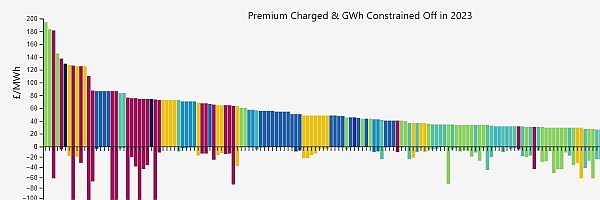
A recent study by Bloomberg has drawn attention to the way that wind farms overstate likely generation at times of constraint and thus cause unreasonable cost (£51m since 2018) to consumers. While correct, excessive prices charged by wind farms to reduce output are a much more significant problem, resulting in much higher total costs for consumers, exceeding for example, £100m in 2023 alone.
Read more: Windfarm Constraint profits exceed £100 million in 2023
On 23 October, 2023, REF sent a letter to Ofgem reporting a possible breach of the Transmission Licence Constraint Condition by Moray East offshore wind farm. Apart from a belated acknowledgement of receipt of the letter on 4 January 2024, we have heard nothing further, so today publish the contents of the letter to Ofgem:
Read more: REF Complaint to OFGEM re Moray East Overcharging for Constraints

Summary
On its website the Moray Offshore Windfarm (East), known as Moray East and comprising one-hundred 9.5 MW turbines located off the North East coast of Scotland, describes itself as a “highly competitive offshore wind project”.
It is certainly notable for its extremely high levels of income, over £1 billion since it began generating in June 2021 and up to July 2023, with a strikingly high average of £234 per megawatt hour generated, well in excess of the average price of £168/MWh, received by gas-fired generators in the same period.
Read more: Moray East Windfarm: The Benefits of Deferring CfD Uptake & a Remote Location
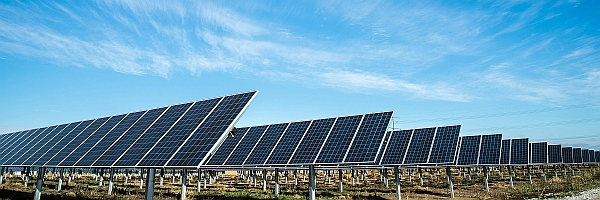
Renewable Energy Foundation has published two substantial studies of wind farm economics by Professor Hughes, the latest of which appeared in 2020. The present study applies the same principles to the analysis of large, utility-scale, solar generation in the United Kingdom and in the United States. Inquiries regarding the study can be made to
Read more: The Economics of Utility-Scale Solar Generation: Summary
Payments to wind farms to reduce output are an ongoing national scandal, with the cost to consumers now totalling well over £1 billion since the payments began in 2010.
We have repeatedly observed that the prices charged by wind farms to reduce output not only routinely exceeded the subsidy income lost when constrained but were hard to justify in any case. Grid congestion preventing dispatch is a foreseeable commercial risk and the windfarms should not be compensated at all for such an eventuality.
However, it has been accepted by government and the regulator that such compensation – for lost subsidy – should be paid.
However, in recent months Scottish wind farms that are not in receipt of income support subsidy, so called “subsidy-free”, wind farms have also been charging the electricity system operator to reduce output when generation in Scotland exceeds grid capacity and local demand.
Read more: Why are “Unsubsidised” Wind Farms Receiving Constraint Payments?
Large volumes of wind energy are being discarded in Scotland in order to preserve grid stability, with a fleet average of over 13% of generation constrained off in the years 2015 to 2021, inclusive, with a high of 19% of generation in 2020. Some wind farms have been discarding between 20% and 50% of their output, while being rewarded with generous constraint payments from the electricity consumer for doing so. The reductions in environmental benefits are not given adequate weight in the planning system, where the low marginal benefit of additional wind capacity appears to be poorly understood. This blog offers detailed data on the volumes of wind energy constrained off at a fleet level in Scotland between 2010 and 2021, and for every individual wind farm in 2020 and 2021.
Read more: Constraint Payments to Wind Power in 2020 and 2021